
Dairy
Cream & milk pasteurization with plate heat exchangers
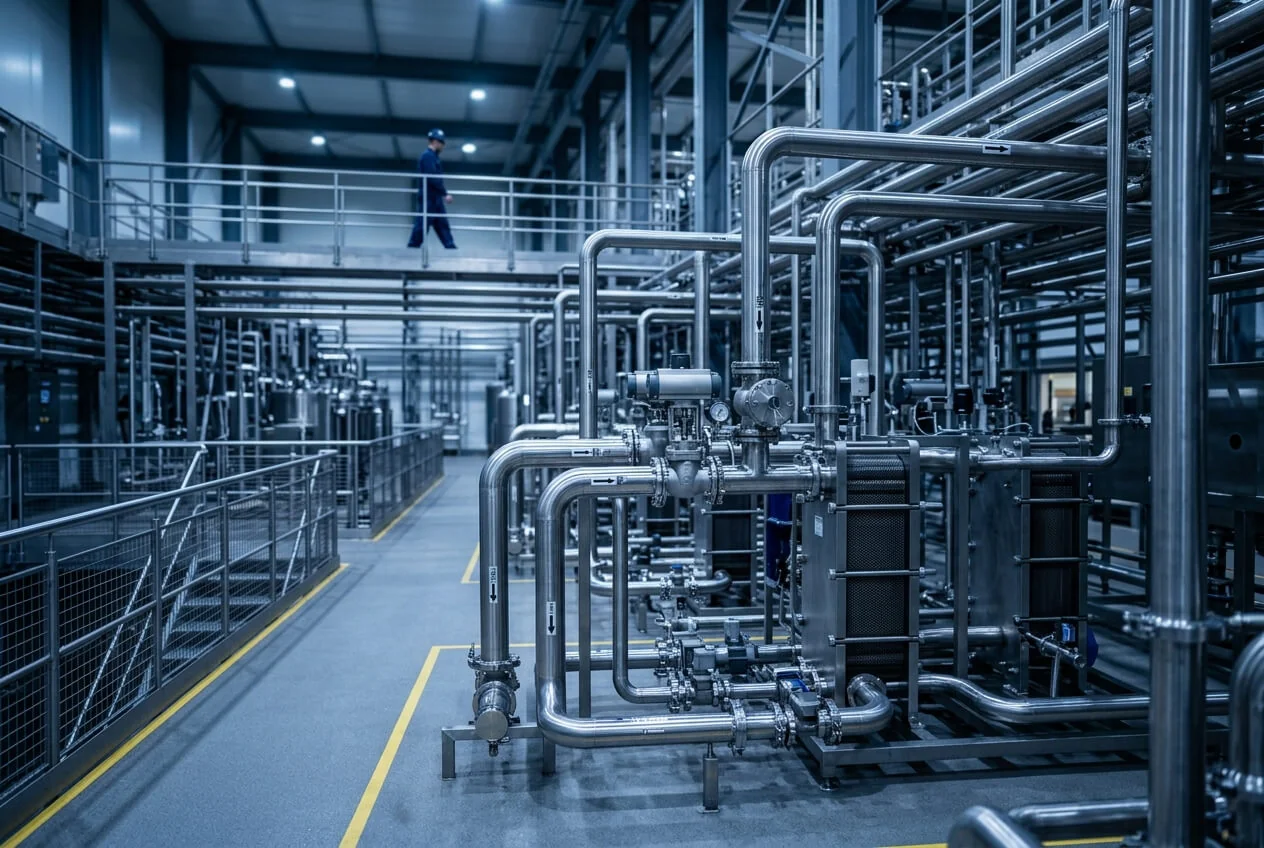
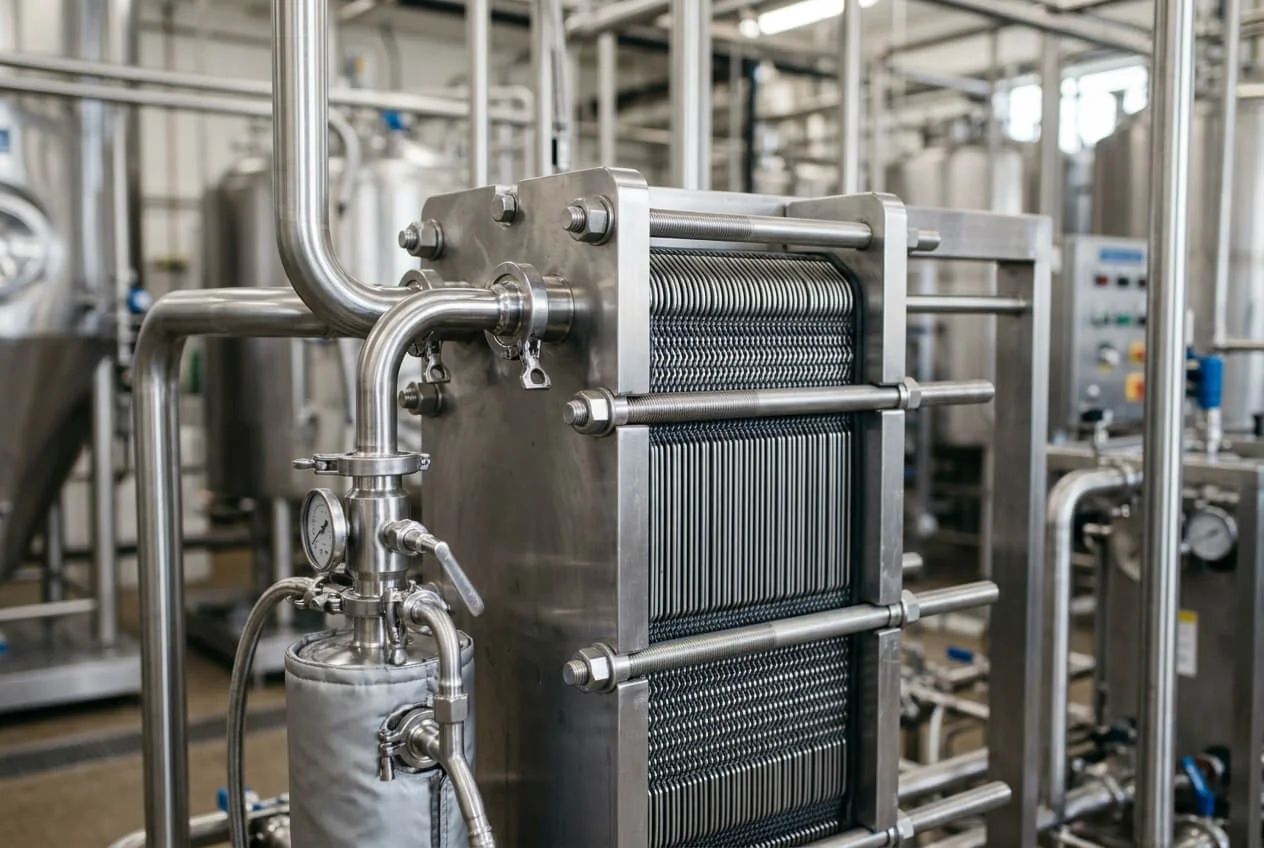
A dairy pasteuriser built around a gasketed plate heat exchanger is really four coordinated sections: regeneration, heating, holding and cooling. Regeneration recovers heat from the hot pasteurised stream into the incoming cold stream — a tight 2–4 °C approach here can recover 90 %+ of the heat and slash utility demand, but it drives plate count and pressure drop. The heating section trims the product to pasteurisation temperature with hot water or steam-heated water; the holding tube fixes residence time; the cooling section drops the product to storage temperature against chilled water or glycol.
For cream, higher viscosity and fat content reduce the film coefficient, so the plate pattern and approach must be chosen for the actual product properties, not water. Gasket material is set by the CIP chemistry and temperature. DFT captures product properties, flow, temperatures, allowable pressure drop and CIP regime, then coordinates the plate selection and utility interfaces so the pasteuriser meets duty without oversizing.