
Preparing a pharmaceutical water-system requirement brief
Connect the required water quality to source-water conditions, demand patterns, distribution and the site's qualification plan.
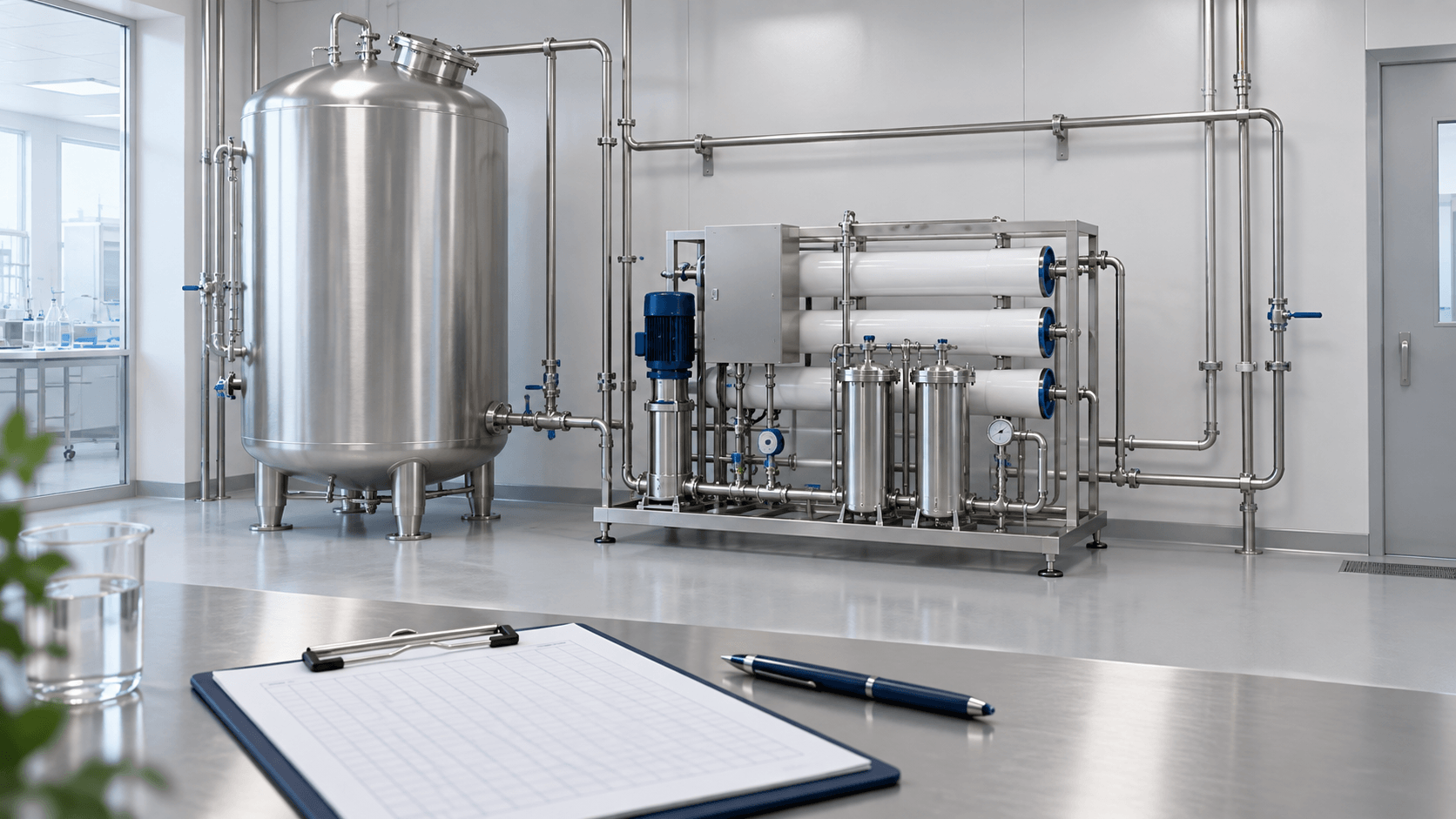
A pharmaceutical water project needs a defined user requirement before equipment is selected. Generation, storage and distribution must be considered together so the required quality can be maintained at the intended points of use.
Start at the point of use
Identify the intended use of the water and the quality requirements approved by the site's quality team. Do not treat purified water, water for injection and general utility water as interchangeable. The applicable market, product and pharmacopoeial requirements should be recorded in the user requirement specification.
List every point of use, its required flow and temperature, and the duration and timing of demand. Distinguish normal production from cleaning, peak demand and future expansion. A daily consumption total alone does not explain whether several users may draw water at the same moment.
Characterise the incoming supply
Praj HiPurity presents water systems as connected treatment and utility services, including purified-water generation. The treatment concept needs a representative feed-water analysis and an understanding of variability. A single sample may not describe seasonal changes or alternative supply sources.
Provide the water source, available pressure, supply interruptions and relevant chemical and microbiological data. Ask the designer to state the assumed feed envelope, pretreatment needs and monitoring requirements. Selection should be justified against the actual source and intended use, rather than copied from a previous plant with different conditions.
Include storage and distribution in the brief
Praj's storage and distribution information emphasises preserving generated water quality through the delivery system. Tank sizing, usage patterns, circulation and the arrangement of user points therefore belong in the initial design discussion.
Define the available space, distribution routes, required temperatures and proposed sanitisation strategy with the engineering and quality teams. Ask how the system will be sampled, monitored, drained and maintained. Avoid specifying isolated numerical rules from an unrelated installation; the project design basis and applicable requirements must support the chosen arrangement.
Agree documentation and lifecycle responsibilities
Identify the required drawings, material records, instrument information, test evidence and qualification support before procurement. Clarify which documents the supplier provides and which activities remain with the site. A component specification is not a substitute for demonstrating the performance of the installed system.
The enquiry package should include the approved water grade, source analysis, demand schedule, point-of-use list, layout constraints and the expected documentation scope. DFT can support requirement capture and technical coordination with Praj HiPurity. The site's quality and engineering teams must approve the final design basis and acceptance criteria. Review operating procedures, monitoring responsibilities and maintenance access as part of that decision, so the installation can be supported throughout its service life.
Further reading
Discuss your application
Share your process conditions and equipment requirements with Delta Flow Tech.
Ask DFT about thisContinue reading
Why a plate heat exchanger misses its target temperature
Separate a changing process duty from fouling or a flow problem before deciding that the exchanger needs more plates.
Learn moreSteam traps: selecting the duty and planning a useful survey
Assess the complete condensate path, then use a consistent survey to distinguish normal operation from leakage or restricted drainage.
Learn more