
Selecting a tank cleaning machine with Sinner's Circle
Balance time, temperature, chemistry and mechanical action, then match Alfa Laval's tank-cleaning technology to the residue, vessel geometry and available CIP supply.
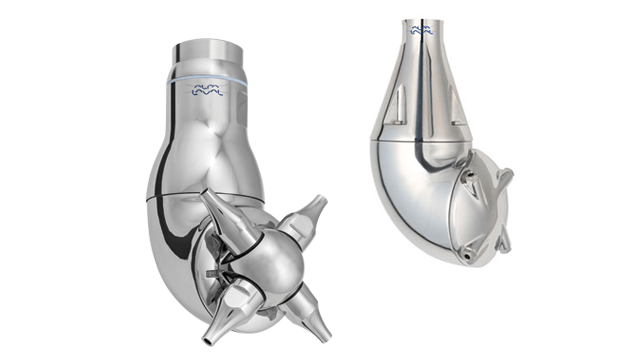
Start with the cleaning outcome, not tank volume alone. Sinner's Circle describes four interacting factors: time, temperature, chemistry and mechanical action. Changing one can change the demand on the others, but the balance is application-specific. It is not a formula that guarantees the same result after an arbitrary reduction in chemicals, heat or cycle time.
01. Define the four cleaning factors
- Time: allow the required contact time and complete cleaning pattern, not just a short wetting period.
- Temperature: choose a validated range for the soil, process and equipment materials.
- Chemistry: match the cleaning agent and concentration to the residue and material compatibility.
- Mechanical action: consider how fluid impact and wall shear detach and transport the soil. A better-matched cleaning head can change this contribution.
02. What the Alfa Laval video explains
The linked video, Three tank cleaning technologies for manufacturing processes, compares static spray balls, rotary spray heads and rotary jet heads. Its published description highlights the different impact forces and shear stresses these technologies apply at the tank surface.
Selection implication: devices that wet the same nominal area do not necessarily deliver the same soil-removal action. Compare the cleaning mechanism against the residue, not simply whether liquid reaches the wall.
- Watch the manufacturer's animation through the video link in Further reading below.
- This article uses the video's verified description, supported by manufacturer technical references; it is not a transcript or a timestamped analysis.
03. Static spray balls: straightforward duties
- Alfa Laval LKRK is a fixed spray-ball example for relatively easy cleaning duties.
- Assess whether the residue can be removed with the available flow, chemical action, temperature and time. No moving parts does not mean no inspection or validation.
- Do not select it solely because its connection fits an existing nozzle; review coverage, drainage and the cleaning demand.
04. Rotary spray heads: dynamic distribution
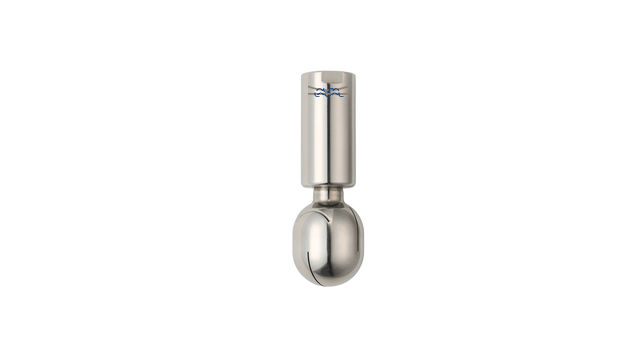
- Rotating fan patterns provide moving liquid coverage and a varying film over the tank wall. Alfa Laval's portfolio includes Multi and Sani rotary spray-head families.
- Consider these where dynamic distribution suits the residue and the available CIP conditions.
- Confirm the required spray pattern, connection, operating range and installation orientation for the exact model.
05. Rotary jet heads: targeted mechanical action
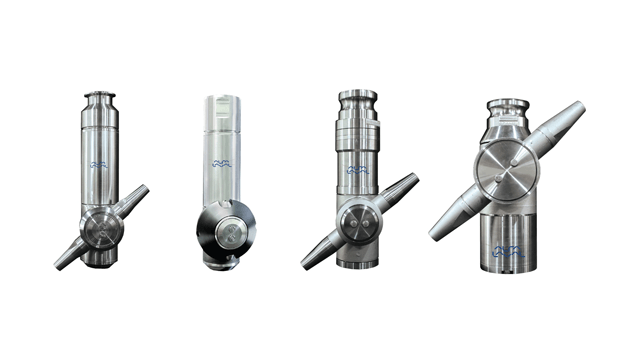
- Alfa Laval TJ and GJ families provide rotary-jet options. Concentrated jets and their cleaning pattern bring a different mechanical contribution from spray-ball or spray-head coverage.
- Evaluate the required impact at the farthest surface and the complete cleaning cycle at the actual supply conditions.
- Do not convert manufacturer example savings into a guarantee for your tank. Compare the validated result and total resource use for the same duty.
06. Capture tank geometry and obstructions
- Provide internal diameter, straight-shell height or length, orientation, end shapes and depths, and the cleaning-head position.
- Identify agitators, baffles, coils, probes and other internals that can create shadow areas.
- Check the cleaning reach, mounting clearance, access opening and drainage. Tank volume alone cannot establish coverage.
- Where internals block a top-mounted device, discuss positioning, additional heads or a dedicated shadow-area device such as Alfa Laval PlusClean.
07. Check the available CIP supply
- Provide pressure and flow available at the cleaning device, allowing for line losses and simultaneous users.
- Document cleaning temperature, chemical concentration, residue type and how long deposits remain before cleaning.
- Review return-flow capacity and filtration requirements with the selected equipment instructions.
- Use the manufacturer's model and nozzle data to confirm the operating point; a pump discharge pressure alone is not sufficient.
08. Validate the selection and lifecycle cost
- Agree what clean means for this process and how coverage and residue removal will be assessed.
- Trial or validate the complete cycle under representative difficult conditions. Wetting coverage and hygienic acceptance are different checks.
- Compare water, chemicals, heating, pump energy, cycle time and maintenance for the same accepted result.
- Send DFT the tank drawing, residue description, agitator and baffle details, available CIP supply and acceptance requirements for application review.
Engineering overview based on Alfa Laval's published technical material and the verified description of the supplied video. No universal size, pressure, temperature, concentration or savings claim is implied. Product images belong to Alfa Laval. Use the exact equipment instructions and site-validated cleaning procedure.
Further reading
- Alfa Laval video: Three tank cleaning technologies for manufacturing processes (opens in a new tab)
- Alfa Laval: Sinner's Circle and hygienic tank-cleaning control (opens in a new tab)
- Alfa Laval: LKRK static spray ball (opens in a new tab)
- Alfa Laval: Sani rotary spray heads (opens in a new tab)
- Alfa Laval: TJ rotary jet heads (opens in a new tab)
- Alfa Laval: PlusClean shadow-area cleaning (opens in a new tab)
Discuss your application
Share your process conditions and equipment requirements with Delta Flow Tech.
Ask DFT about thisContinue reading
Why a plate heat exchanger misses its target temperature
Separate a changing process duty from fouling or a flow problem before deciding that the exchanger needs more plates.
Learn moreSteam traps: selecting the duty and planning a useful survey
Assess the complete condensate path, then use a consistent survey to distinguish normal operation from leakage or restricted drainage.
Learn more